







“The Vows of John Casimir”: A Prophecy Written on the Threshold of Eternity
Blogs | 29 August, 2026 at 17:41 | 1,684 | Author: Olena Zelenina
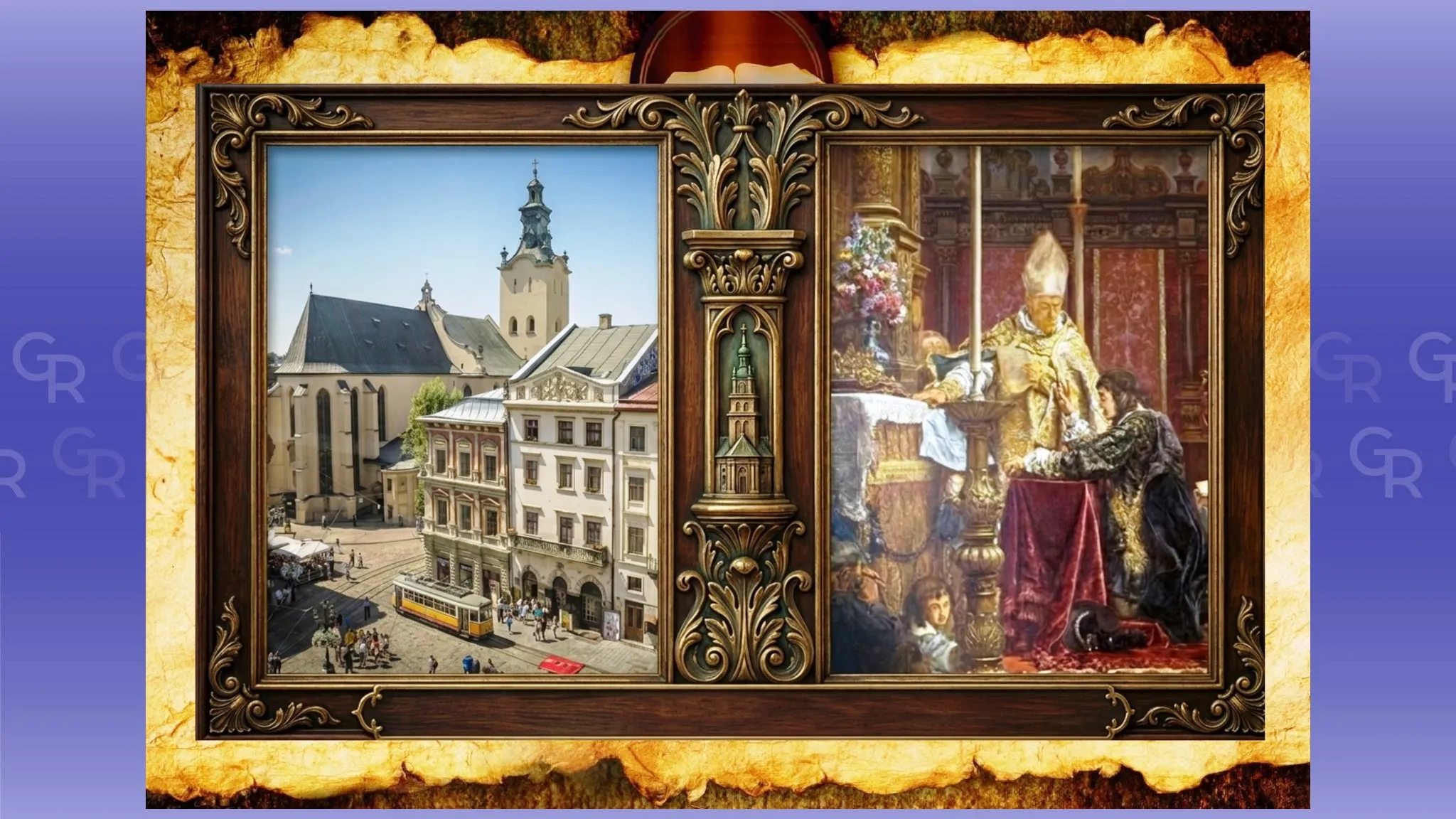
Collage by Olena Zelenina. Photo of the Latin Cathedral of Lviv: Konstantin Brizhnichenko.
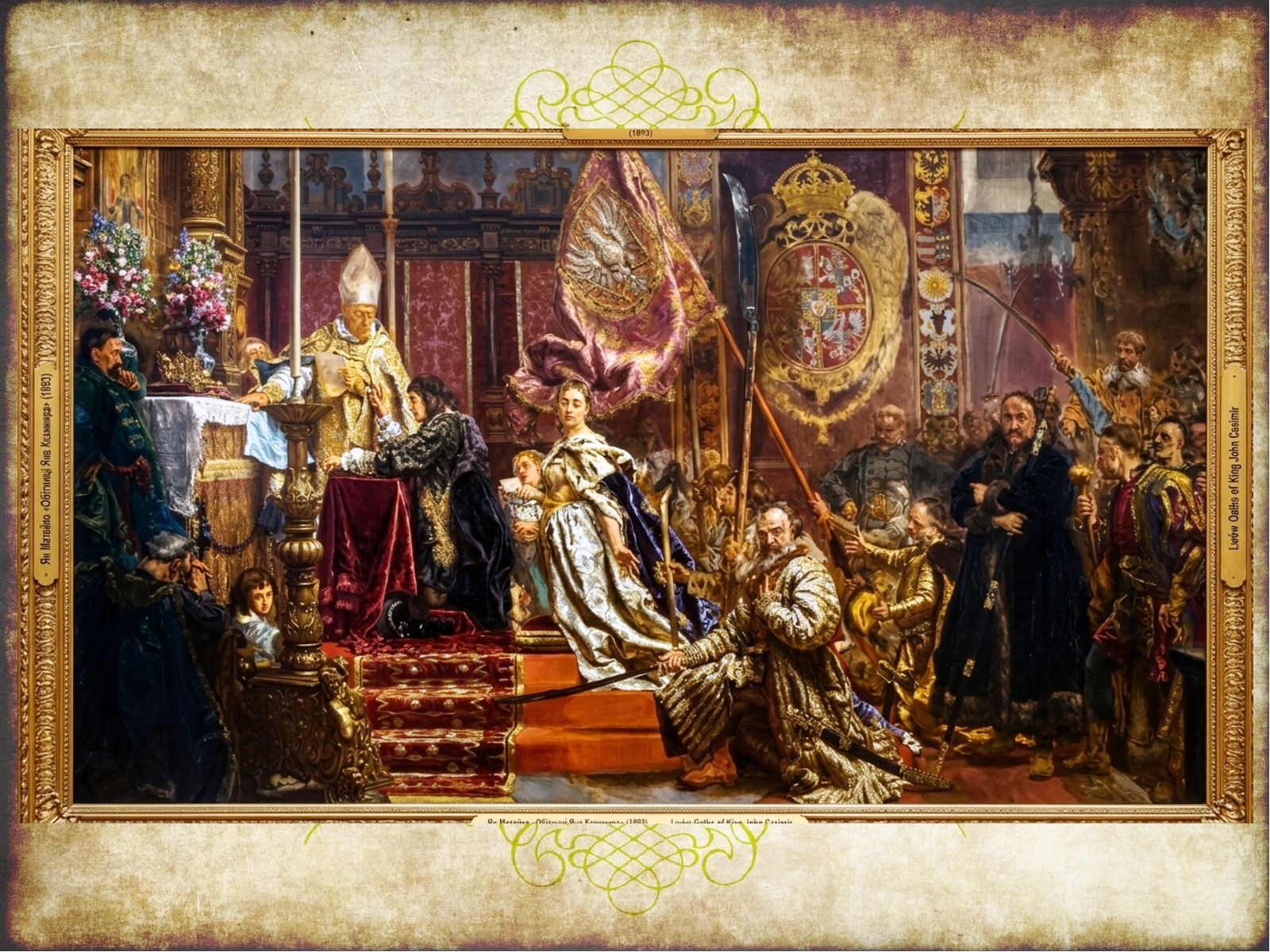
Standing before this monumental canvas in the National Museum in Wrocław, I find myself thinking that I am looking at much more than a mere painting. This is no passive historical narrative or dry textbook illustration. It is a national drama forged in pain, atonement, and the premonition of catastrophe—the final testament left to us by the great Jan Matejko in October 1893, just days before his death.
He painted it while battling grueling pain, hastening to pay his last debt to his suffering homeland. At that moment, Poland no longer existed on the map—it had been torn apart by neighboring empires.
Matejko transports us to April 1, 1656, in Lviv, where another catastrophe was unfolding: the era of the “Deluge.”
The nation’s banner was fraying at the seams,
and the country was losing what mattered most…
As I gaze at these faces on the canvas, I see the tragedy of any nation facing total destruction. How painfully this resonates with our present day!
A treacherous invasion by the Swedish aggressor from the north, an exhausting war, total occupation, and the seizure of cities. Yet the greatest danger at that moment came not from the external enemy, but from the betrayal of internal elites.
The Polish nobility, blinded by pride and selfish interests, readily swore allegiance to the invader. The nation’s banner was fraying at the seams, and the country was losing what mattered most—its sovereignty and independence.
At the center of the composition stands King John II Casimir Vasa. He kneels in the Latin Cathedral of Lviv, entrusting the Polish-Lithuanian Commonwealth to the patronage of the Virgin Mary.
Yet look at the crown lying beside him on the velvet cushion! It has been removed from the monarch’s head. This is a striking, profound symbol. It reflects both humility before higher powers and a bitter acknowledgement: state authority hangs by a thread; it is rendered powerless without national unity.
It is also a premonition that the monarch, unable to curb noble anarchy and fulfill his pledge to alleviate the plight of the peasantry, will ultimately abdicate the throne.
Matejko brilliantly encoded the painting’s chief warning through the spatial positioning and stark contrast of its figures.
A dark figure harboring a future rokosz
Look at the light, submissive figure of Queen Marie Louise Gonzaga in her radiant attire—and then at the dark, brooding figure of the Grand Marshal Jerzy Sebastian Lubomirski. Matejko deliberately frames his positioning as the absolute moral antipode to the submissive Queen and the praying King.
While the entire cathedral kneels in a surge of patriotic and religious devotion, Lubomirski stands at full height. He displays defiance and arrogance. Draped in heavy, almost black robes, he rests on his marshal’s staff and gazes gloomily from beneath his brows at the royal couple. In that heavy glare, Matejko already inscribed the impending bloody rokosz (armed rebellion)—a stab in the back of his own country that would crush all hopes of reform aimed at saving the Commonwealth from the noble anarchy that tore the nation apart during every royal election.
The King publicly promised to ease the burden of serfdom, protect peasants from the tyranny of magnates, and grant them greater rights. This was no mere moral gesture; it was a token of gratitude to the peasantry, who launched a guerrilla resistance against the Swedes while the nobility and magnates betrayed the realm en masse.
However, after driving out the Swedes, the magnates and nobility in the Sejm adamantly refused to surrender their privileges or ease the exploitation of the peasantry. Royal authority proved too weak to enforce these promises.
Matejko, fully aware of the consequences of these events, reveals how even during the moment of prayer and vow (1656), Lubomirski stands nearby—the man who, years later, would destroy all hopes for political modernization (vivente rege) and social justice for the sake of preserving magnate privileges.
Incidentally, beside Lubomirski, Matejko positioned Field Crown Hetman Stanisław Lanckoroński. He holds the hetman’s mace—a symbol of military authority and responsibility for the borders of the Commonwealth.
How remarkably the threads of history intertwine! Gazing upon Stanisław Lanckoroński on this 17th-century canvas, one cannot help but recall his distant great-great-granddaughter—the distinguished art historian, Countess Karolina Lanckoronska.
Nearly three centuries after the Lviv Vows, in the mid-20th century, this noblewoman would endure the horrors of the Ravensbrück concentration camp.
Surviving interrogations by the Gestapo, torment, and the threat of execution, she remained unbroken, refusing to sign any treacherous capitulation, remaining faithful to her culture and human dignity until her final days. The lineage whose ancestor stood armed at the altar in Matejko’s painting gave the world an enduring example of unyielding spirit in the darkest era of the 20th century.
The steel blade of the Commonwealth: A mirror to Matejko’s own soul
The artist intentionally placed Lubomirski behind the back of Hetman Stefan Czarniecki—Czarniecki serves as a "living shield" between the crown and the future traitor.
He kneels in the foreground, his saber lowered to the ground. Peer into his face—Matejko bestowed upon him his own portrait features!
This is the self-portrait of a dying master. Through the eyes of the renowned commander, the artist looks at us across the centuries. There is no triumphant exultation in his gaze. Instead, there is the profound exhaustion of a man who devoted all his strength to preserving the spirit of his nation, alongside a silent question for future generations: “Will you safeguard that for which we shed our blood and sweat?”
This canvas stands as a bitter yet majestic lesson. It reminds us that aggressors and enemies are powerless where internal unity prevails, but no state can endure if its elites choose personal ambition over the homeland.
In Wrocław, before this painting, one involuntarily holds one's breath, feeling history speak directly to the soul.

Comments
Some more relevant news for now